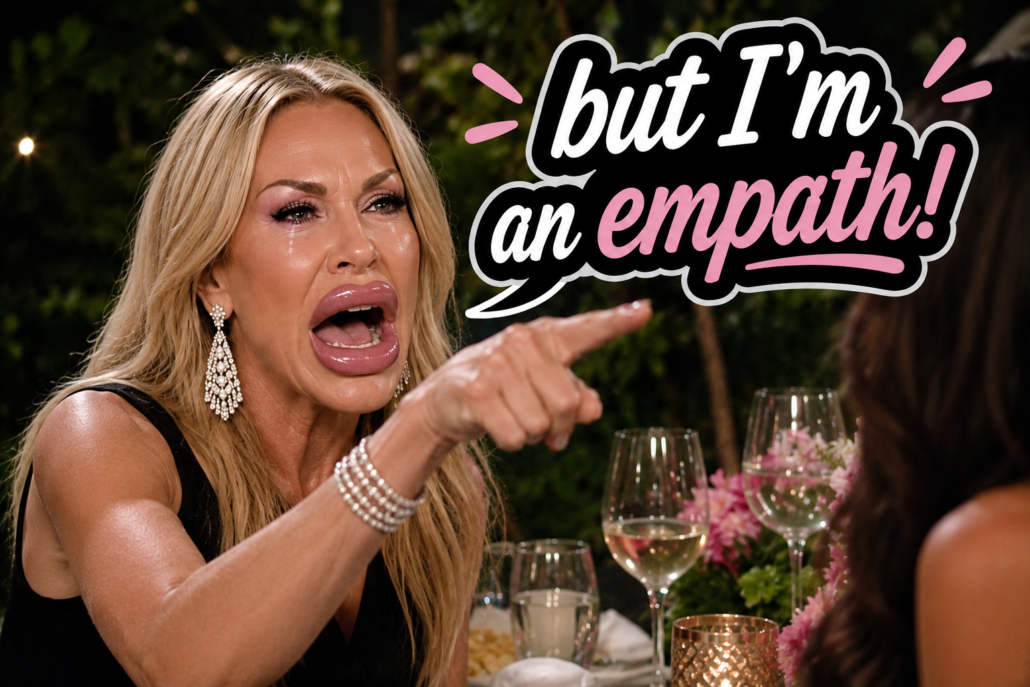
If you’ve watched reality TV lately, you’ve probably heard a few folks confidently declare, “I’m an empath.” I’ll admit it, I laughed out loud the other day when I heard one of the Real Housewives describe herself that way. My first thought was, Wait… are we watching the same show?
Somewhere along the way, the word empath became one of those trendy labels people throw around whenever someone is emotional, sensitive, or cries during an argument. These days, everyone seems to think they’re an empath.
But here’s the thing. Being emotional doesn’t automatically make you an empath. Neither does being compassionate, intuitive, or caring. And simply saying you “feel everyone’s energy” doesn’t tell the whole story.
In fact, many people who identify as empaths aren’t describing empathy at all. They’re describing anxiety, poor boundaries, people-pleasing, hypervigilance, or emotional overwhelm. Those are very real experiences, but they’re not the same thing.
As a psychic medium and spiritual teacher, I’ve spent more than two decades working with empaths, myself included. One of the biggest misconceptions I encounter is the belief that being an empath means carrying everyone else’s emotional baggage. Nothing could be further from the truth.
In this article, I want to separate fact from fiction by exploring what an empath really is, what an empath isn’t, and how to recognize the difference.
What Is an Empath?
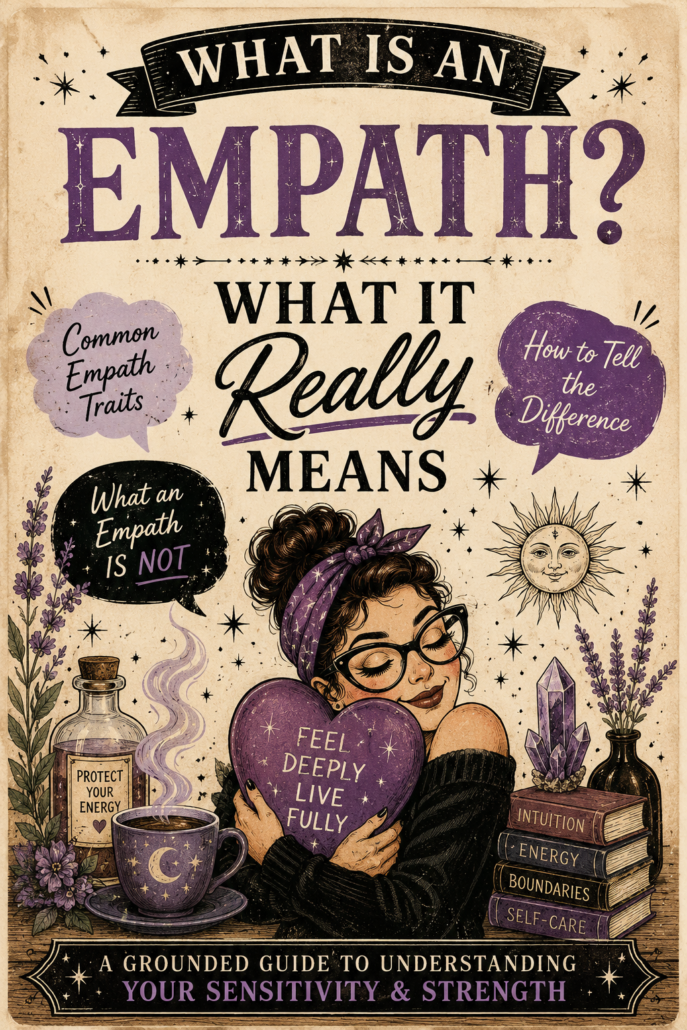
At its core, an empath is someone who experiences the emotional and energetic world more intensely than the average person. Notice I didn’t say someone who cares deeply. Most kind people care about others. Most compassionate people can put themselves in someone else’s shoes. That’s empathy, and it’s a wonderful human quality.
An empath goes a step further. While most people can recognize when someone else is happy, sad, anxious, or angry, empaths often feel those emotions within themselves. It’s almost as if another person’s emotional state briefly becomes their own.
This is where people often confuse empathy with being an empath. Nearly everyone is capable of empathy. We comfort friends, celebrate victories, and grieve with those we love. That’s part of being human. An empath, however, experiences another layer altogether. They don’t simply understand another person’s emotions. They often absorb them.
I also believe empathy exists on a spectrum. Some people occasionally pick up on the emotional atmosphere around them, while others experience emotional and energetic information so intensely that it influences nearly every aspect of their daily lives. Neither experience is more “spiritual” than the other. It’s simply how each person processes emotional and energetic information.
Imagine someone walks into your office after receiving devastating news. They smile politely and insist they’re “fine,” but within moments you feel an unexpected heaviness in your chest. Your mood shifts for no apparent reason. Hours later, after they’ve left, you notice that the sadness has lifted. That’s the kind of experience many empaths describe.
This heightened sensitivity can be a tremendous gift. It allows empaths to comfort others, recognize dishonesty, sense unspoken needs, and navigate life using both intuition and observation. It’s also one of the reasons many empaths are naturally drawn to careers in counseling, healthcare, teaching, healing arts, or spiritual work.
But every gift comes with challenges. Without healthy boundaries, an empath can easily become emotionally exhausted, overwhelmed, or confused about which feelings belong to them and which belong to someone else.
What an Empath Isn’t
Being an empath isn’t a personality trend or a spiritual badge of honor. It’s a unique way of processing emotional and energetic information that comes with incredible gifts and very real challenges.
In fact, a true empath would probably make a terrible reality television star.
Think about it. The people who thrive on drama often enjoy the attention, the competition, or the adrenaline that comes from confrontation. A genuine empath usually experiences conflict very differently. Arguments don’t just register intellectually; they can feel physically and emotionally overwhelming.
Many empaths don’t fight back, not because they’re weak or have nothing to say, but because they instinctively absorb the emotional intensity of the moment. They may shut down, walk away, or retreat to process what just happened. Hours later, after their nervous system has settled, they’ll think of everything they wished they’d said. That’s because many empaths need time alone to separate their own emotions from the emotions they’ve unintentionally absorbed during the conflict.
That doesn’t mean all empaths avoid conflict. Healthy empaths absolutely learn how to set boundaries, speak up for themselves, and have difficult conversations when necessary. The difference is that most aren’t looking for a fight. They don’t enjoy emotional chaos, and they certainly don’t create it for entertainment.

Ironically, this is one of the reasons I chuckle when I hear someone behaving outrageously on television and then announcing, “But I’m an empath!” While none of us can truly know another person’s inner experience, it’s worth remembering that empathy isn’t measured by how emotional someone becomes. It’s measured by how deeply they experience and respond to the emotions and energy of others.
Being an empath also does not mean:
- You’re emotional all the time.
- You cry easily.
- You’re a people pleaser.
- You avoid conflict.
- You always put everyone else first.
- You’re anxious in social situations.
- You’re responsible for fixing everyone.
- You’re psychic by default.
- You absorb everyone’s energy every minute of every day.
Some of these traits may overlap, but they don’t define an empath.
For example, someone with anxiety may constantly monitor other people’s moods because they’re worried about rejection or conflict. That heightened awareness can feel very similar to empathy, but the motivation is completely different.
Likewise, people who grew up in unpredictable households often became experts at reading facial expressions, tone of voice, and body language as a survival skill. Again, that’s understandable, but it isn’t necessarily the same as being an empath.
I’ve met deeply intuitive empaths who are confident, assertive, and excellent at setting boundaries. I’ve also met people who identify as empaths but are actually struggling with chronic stress, burnout, or unresolved trauma.
Understanding the difference is incredibly freeing because it helps you find the right tools for your own growth.
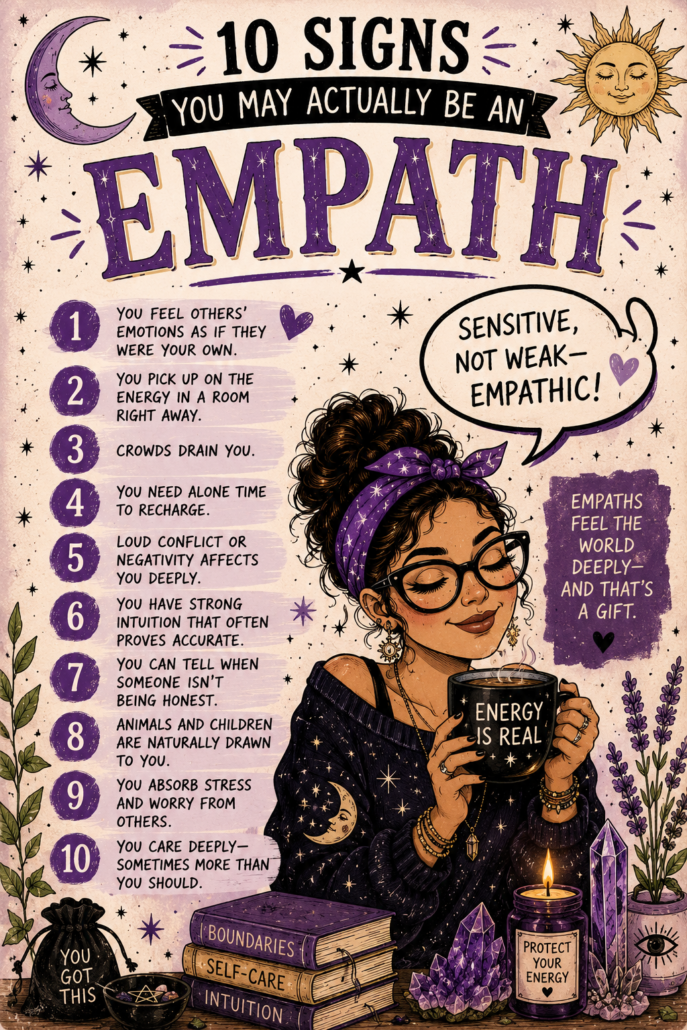
Signs You May Be an Empath
You don’t have to check every box, but many empaths recognize themselves in several of these experiences:
- You often know how someone feels before they say a word.
- Crowded places leave you feeling drained.
- You need regular alone time to recharge.
- You absorb the emotional atmosphere of a room.
- Loud conflict affects you deeply.
- Animals and children seem naturally drawn to you.
- You have strong intuition that often proves accurate.
- You can usually tell when someone isn’t being honest.
- People naturally confide in you, even strangers.
- You sometimes struggle to separate your emotions from someone else’s.
If you’re nodding your head while reading this list, you may indeed be an empath. You may also be wondering whether you’re an empath or a Highly Sensitive Person (HSP). While the two share many traits, they aren’t necessarily the same, and we’ll explore those differences in a future article.
The Biggest Mistake Empaths Make
The biggest mistake I see empaths make has nothing to do with being “too sensitive.” Instead, it stems from the belief that because they can feel another person’s pain, they are somehow responsible for carrying it or fixing it.
While this belief usually comes from genuine compassion, it often leads to emotional exhaustion, burnout, resentment, and unhealthy relationships.
One of the most valuable lessons an empath can learn is that compassion does not require self-sacrifice. You can witness someone’s pain, hold space for them, and offer support without absorbing their emotions as your own. In fact, doing so allows you to be far more present and helpful because you remain grounded instead of becoming overwhelmed.
Healthy empaths understand the importance of energetic and emotional boundaries. They learn how to listen without absorbing, care without rescuing, and support others without losing themselves in the process. Rather than diminishing their gift, these boundaries strengthen it. They allow an empath’s natural intuition and compassion to shine without leaving them emotionally depleted at the end of the day.
My Perspective
After working with empaths for more than two decades as a psychic medium and spiritual teacher, I’ve worked with empaths and highly sensitive people for many years. One pattern has become abundantly clear: most empaths don’t need to become more intuitive. They’re already remarkably intuitive. What they need is the ability to trust what they’re sensing while also recognizing what belongs to them and what belongs to someone else.
This kind of discernment is one of the most important skills an empath can develop. It means learning the difference between intuition and fear, between compassion and codependency, and between sensing another person’s energy and unconsciously carrying it. These distinctions may seem subtle at first, but they have a profound impact on every area of life.
When empaths develop healthy discernment, everything begins to change. Their intuition becomes clearer because it is no longer clouded by emotional overload. Their relationships become healthier because they stop taking responsibility for other people’s healing. Most importantly, they begin to experience their sensitivity as the gift it truly is instead of seeing it as a burden they have to manage.
Embrace Your Power
If you’ve recognized yourself throughout this article, I hope you’ll stop seeing your sensitivity as something that needs to be fixed. For many empaths, the greatest source of suffering isn’t their gift. It’s the lack of understanding that surrounds it.
You don’t need to become less sensitive. You don’t need to build an emotional wall or stop caring deeply about other people. What you need is discernment. You need to know the difference between compassion and responsibility, between intuition and fear, and between your own emotions and the emotions you’ve unintentionally absorbed from someone else.
That’s where your power lies.
Being an empath isn’t a trendy personality label or a spiritual badge of honor. It’s a unique way of experiencing the world. When you learn how to understand it, protect it, and trust it, your sensitivity becomes one of your greatest strengths instead of your greatest burden.

For more support and inspiration, check out Judith Orloff’s Thriving As An Empath.