Intuition is often described as something mysterious, elusive, or difficult to access. People talk about strengthening it, opening it, activating it, or learning how to hear it more clearly, as though intuition is a distant voice we have to somehow reach. But sometimes the problem is not that your intuition is weak. Sometimes your life is simply too loud.
We are surrounded by input almost constantly. Opinions, advice, social media, news, text messages, responsibilities, expectations, and other people’s emotions all compete for our attention. For empaths and highly sensitive people, this can be especially overwhelming because we may be processing much more than our own thoughts and feelings. We notice changes in tone, shifts in mood, unspoken tension, subtle reactions, and the emotional atmosphere around us. After enough of that, it can become surprisingly difficult to answer a very simple question: What do I actually think?
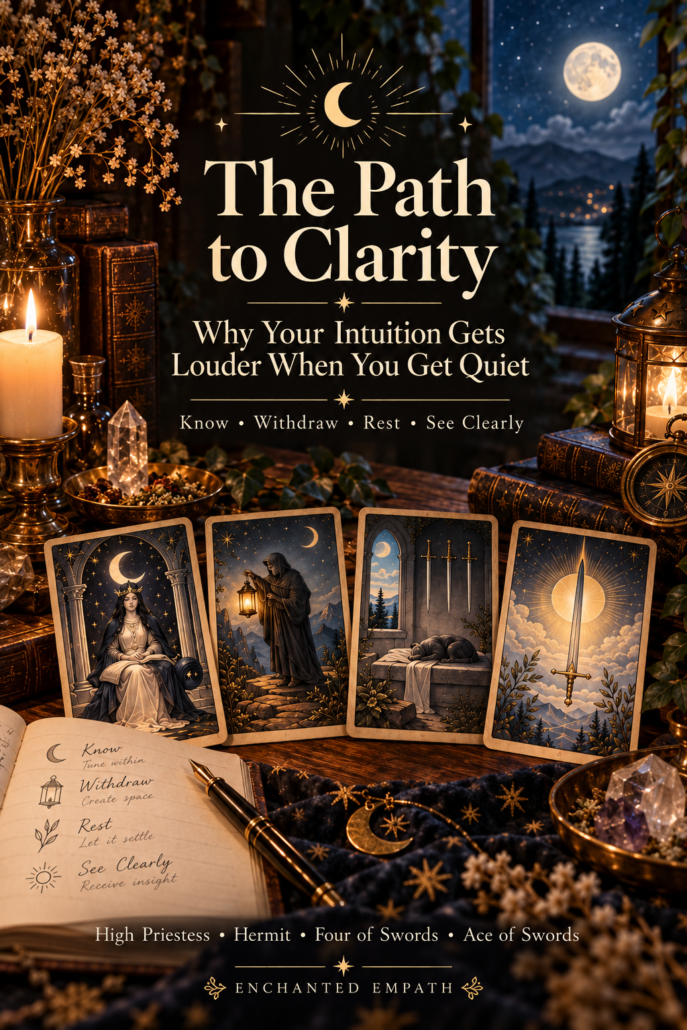
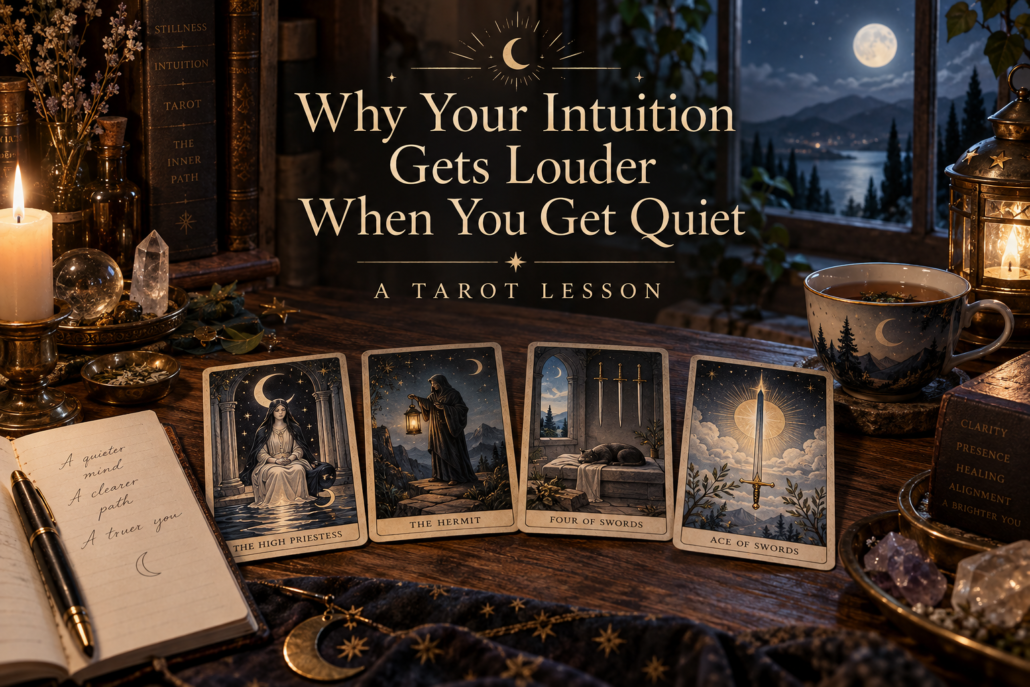
Tarot gives us a beautiful way to understand what happens when we begin removing some of that noise. The High Priestess, the Hermit, the Four of Swords, and the Ace of Swords create a natural progression from inner knowing to clarity. Together, they suggest that intuition may not need to be created or forced at all. It may simply need enough space to become recognizable.
The High Priestess: You Already Know More Than You Think

The High Priestess is one of the clearest symbols of intuition in Tarot. She represents inner knowing, mystery, receptivity, and that part of us that understands something before we can necessarily explain it. What I love about this card is that she is not chasing answers. She is not running from person to person asking what they think, searching for reassurance, or gathering endless information so she can finally feel certain. Her power comes from being receptive enough to notice what is already present.
That is often how intuition works in real life. It may arrive as a feeling in the body, a quiet yes, a subtle hesitation, or a thought that seems to appear before we have had time to reason through the situation. You might meet someone and immediately feel comfortable around them, or experience the opposite reaction without knowing exactly why. You might feel drawn toward an opportunity even though it makes little logical sense yet, or quietly recognize that a situation is finished long before you are emotionally ready to admit it.
The difficulty is that intuitive information is often subtle, while the analytical mind can be very loud. A clear impression may arise, and almost immediately we begin questioning it. We wonder whether we are imagining things, being unfair, overreacting, or projecting. We start looking for evidence and reassurance, and before long the original feeling is buried beneath layers of analysis. The High Priestess asks us to become more aware of what appeared before all that commentary began.
The Hermit: Stepping Away From Everyone Else’s Voice

If the High Priestess represents inner knowing, the Hermit shows us how we may become better able to hear it. Sometimes we need to withdraw from outside noise long enough to recognize our own voice again. This does not mean isolating ourselves from the world or becoming suspicious of advice. It simply means remembering that outside perspective is only one part of the decision-making process.
We have become incredibly accustomed to outsourcing our inner authority. We read reviews before making simple choices, search online for other people’s experiences, ask friends what they would do, and seek reassurance from experts, teachers, coaches, readers, family members, and strangers. None of this is inherently wrong. Outside information can be extremely useful. The problem begins when additional input stops creating clarity and begins creating confusion.
For empaths, this can be especially complicated because other people’s opinions often arrive with emotional weight. Someone else’s fear can make us doubt a decision we previously felt peaceful about, while someone else’s enthusiasm can temporarily persuade us to pursue something that never quite felt right. The Hermit reminds us that there are moments when the most useful thing we can do is step away from all of that input and spend enough time alone with ourselves to rediscover what we actually know.
The Four of Swords: Stillness Is Part of the Process
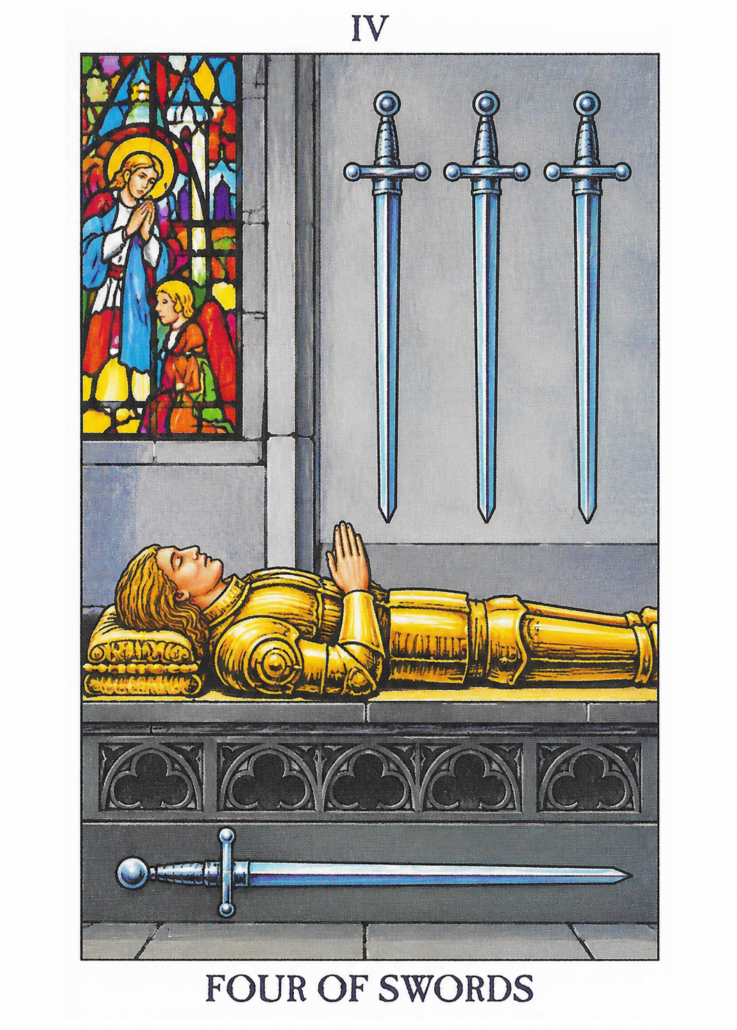
The Four of Swords deepens this idea by introducing stillness. This card is often associated with rest, but its wisdom extends far beyond physical recovery. It also represents the mental space that opens when we stop demanding an immediate answer. Many of us approach intuition as though it were a problem we could solve through sufficient effort. We think harder, pull more cards, journal another page, ask another question, replay the conversation again, search for another sign, and keep trying to locate the one missing piece that will finally make everything clear.
There is a point, however, when continued searching no longer helps. Thinking turns into rumination, and reflection becomes noise. The Four of Swords reminds us that rest can be an active part of discernment. Taking a walk without listening to anything, sitting outside, putting the phone in another room, taking a bath, cooking dinner, or simply allowing ourselves to stop working on the question can create the space our minds need to settle.
This matters because clarity often becomes available only after emotional urgency subsides. When the nervous system calms down, our perception changes. We stop trying to force the answer toward the outcome we prefer. We are no longer reacting quite so strongly to fear, pressure, or other people’s expectations. Stillness is not an absence of information. Often, it is the condition that allows the information we already have to organize itself into something we can finally understand.
The Ace of Swords: Clarity After the Noise
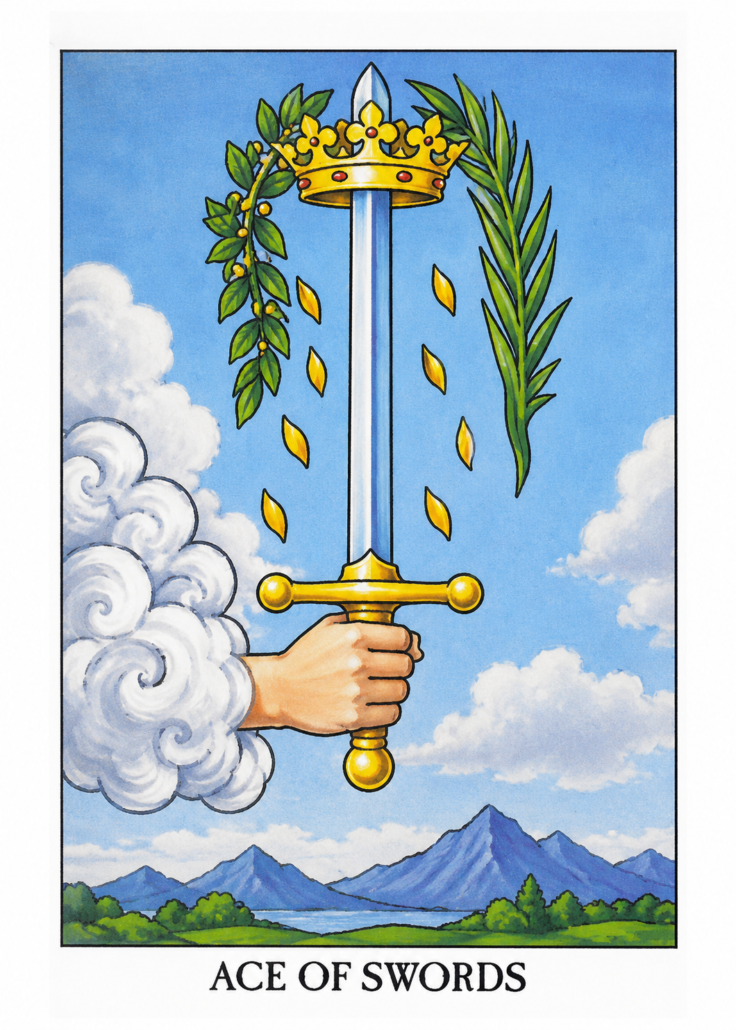
The Ace of Swords represents what can happen when all of that unnecessary noise begins to clear. It is the moment when a complicated situation suddenly looks much simpler. The answer may not be easy, comfortable, or convenient, but there is often a feeling of unmistakable recognition. You realize that you do not want the relationship, that you need to have the conversation, that the opportunity is not right for you, or that you have known for some time what needs to happen next.
This kind of clarity is very different from emotional certainty. We do not always feel happy about what we know. Sometimes intuitive clarity brings grief, disappointment, or the realization that change is necessary. The Ace of Swords does not promise that truth will be comfortable. It suggests that truth has a clean quality to it. Once we see it, much of the mental struggle begins to fall away.
That is why the progression of these four cards is so meaningful. The High Priestess reminds us that inner knowing already exists. The Hermit creates distance from excessive outside influence. The Four of Swords allows the mind and nervous system to settle. The Ace of Swords represents the clarity that can emerge when we stop drowning ourselves in information.
Empaths May Need Less Input, Not More
Empaths are often very skilled at receiving information. We notice tone, facial expression, body language, emotional shifts, inconsistencies, and the needs of the people around us. These can be wonderful strengths, but sensitivity can also make it difficult to recognize when we have already received enough information. We may continue scanning, listening, analyzing, and taking in more long after the essential truth of a situation has already become apparent.
That is why intuitive development is not always about opening ourselves further. Sometimes it is about becoming more selective. We may need less advice, less emotional input, less urgency, less pressure, and fewer voices competing for our attention. Our intuition does not necessarily become stronger when we get quiet. We may simply become better able to distinguish it from everything else.
This distinction is particularly important for people who identify strongly with being sensitive or intuitive. More sensitivity is not always the answer. Discernment includes knowing when to close the door, step away, and give ourselves a chance to hear our own thoughts again.
Notice the First Response Before the Analysis Begins
One of the simplest ways to practice this is to begin noticing your first response before analysis takes over. Imagine someone invites you to an event. Before you start thinking about whether they will be disappointed if you decline, whether the event might be useful, whether you should make the effort, or whether staying home would seem antisocial, notice what happened in you first.
Perhaps there was a feeling of expansion, relief, excitement, heaviness, resistance, or neutrality. That first response does not have to become your final decision, and intuition does not mean obeying every passing feeling without thought or context. It is simply valuable information. Many of us have become so practiced at overriding those first impressions that we barely register them anymore.
The goal is not impulsivity. The goal is awareness. By becoming curious about what we feel before obligation, fear, conditioning, and other people’s reactions enter the conversation, we become more familiar with our own internal language.
Sometimes You Do Not Need Another Answer
There is something almost comical about how determined we can become when searching for guidance. We ask the same question in slightly different ways because we do not like the answer we received the first time. We pull another card, ask another friend, watch another video, look for another sign, or search for one more interpretation. Eventually, we have gathered so much input that we genuinely no longer know what we think.
At that point, another answer may not be helpful. Quiet may be more useful than guidance.
That is the larger Tarot lesson in the progression from the High Priestess to the Hermit, the Four of Swords, and finally the Ace of Swords. We begin with inner knowing, step away from outside noise, allow stillness to do its work, and create the conditions for clarity to emerge. The cards do not need to predict what will happen next. They can teach us something much more useful about how we relate to ourselves.
The next time you find yourself desperately searching for clarity, consider asking a different question: What might I hear if I stopped listening to everyone else for a little while? You may discover that the answer is not as far away as you thought.