There is a particular kind of frustration that does not come from a lack of answers, but from a lack of trust in the answers you already have. You sense something clearly. You feel it in your body. It comes as a quiet knowing—steady, uncomplicated, and direct. And yet, almost immediately, it is followed by a second voice that questions it.
You wonder if you are overthinking or underthinking. You question whether it is intuition or fear. You look for confirmation. You revisit the situation from different angles, hoping to arrive at something more solid, more certain, more defensible.
Over time, this creates a subtle but exhausting dynamic. You are not without guidance—you are simply unwilling to rely on it.
What’s Actually Happening Beneath the Surface
In my work, this is one of the most common patterns I see. People assume they are unclear when, in reality, they are disconnected from their own authority. The issue is not access to intuition; it is the habit of overriding it.
This often develops for understandable reasons. You may have learned to second-guess yourself. You may have been rewarded for logic over instinct, or taught to defer to others who seemed more certain. You may have made a decision in the past that did not unfold as expected, and now hesitate to trust yourself again.
So instead of moving forward with what you sense, you pause. You analyze. You gather more input. You attempt to build a case strong enough to eliminate doubt entirely.
But intuition does not work that way. It does not argue. It does not prove itself. It presents, and then it waits.
The Tarot Pattern: High Priestess Energy
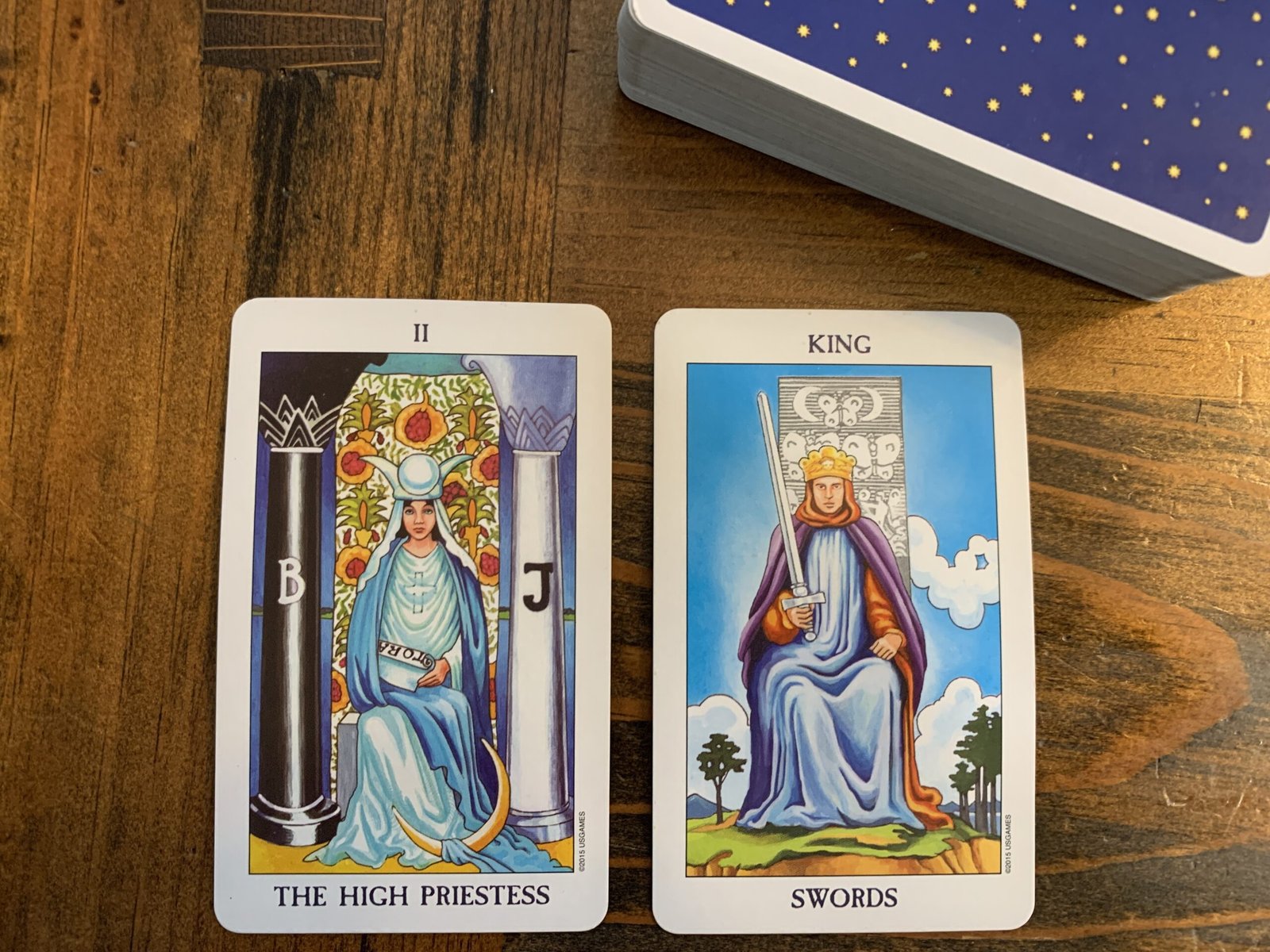
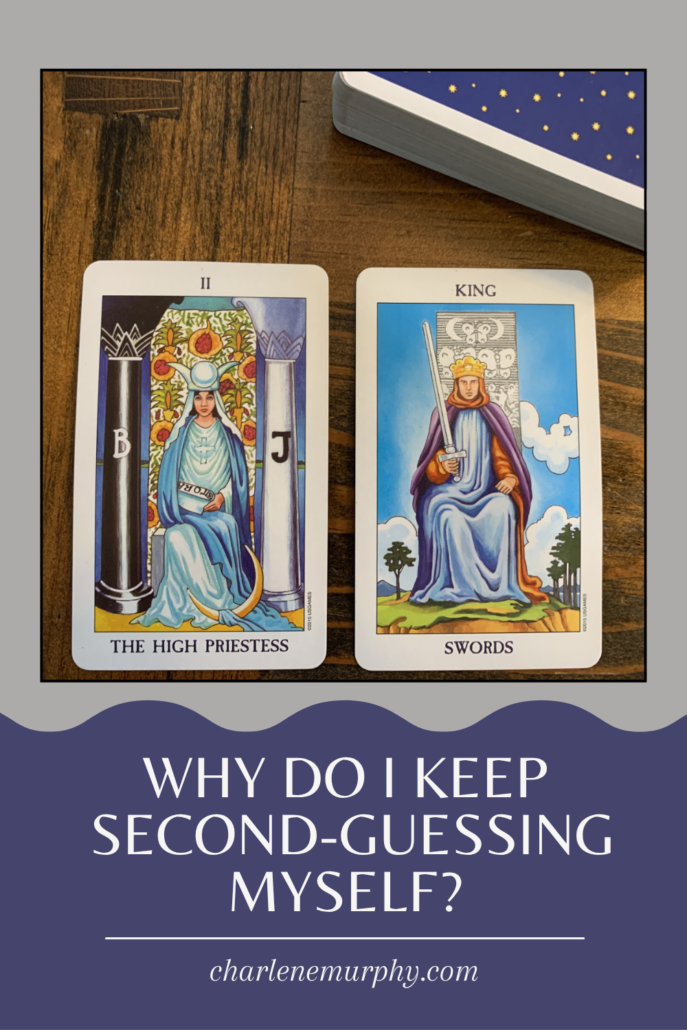
There is a Tarot archetype that captures this dynamic with precision: the High Priestess. She represents inner knowing, intuitive awareness, and the kind of clarity that does not need external validation. Her presence is quiet, but unmistakable. She does not push or persuade; she simply reveals.
When this energy is active in your life, you are already receiving guidance. You sense what is aligned and what is not. You recognize when something feels off, even if you cannot immediately explain why. The difficulty is not in accessing this knowing, but in honoring it.
The High Priestess does not repeat herself endlessly. When ignored, her voice does not become louder. It becomes easier to dismiss.
The Shift: King of Swords Clarity
The King of Swords represents the movement out of this pattern of second-guessing. Where the High Priestess knows, the King of Swords decides. He brings structure, clarity, and authority to what has already been perceived.
This is not a shift from intuition to logic, but from intuition to leadership. The King of Swords does not wait for additional confirmation. He takes what is known and gives it form through decision and action.
This is where trust becomes visible. Not in how deeply you feel something, but in what you are willing to do with what you feel.
The poet Rumi wrote, “What you seek is seeking you.” It is a simple line, but it reflects a profound truth about intuition. The clarity you are looking for is not separate from you. It is already present, already moving toward you, already available.
The question is not whether the answer exists. The question is whether you are willing to recognize it as your own.
How to Trust Your Intuition Again
If you recognize yourself in this pattern, the shift does not begin with finding better answers. It begins with changing your relationship to the answers you already receive.
Instead of asking, “Is this right?” try asking, “What do I already know about this?”
Then notice what arises before the analysis begins. That first response—quiet, immediate, and often understated—is usually the clearest.
From there, the work is not to strengthen the knowing, but to follow it. Even in small ways. Even without full certainty. Trust is not built through perfect decisions; it is built through consistent self-honoring.
The Return to Self-Trust
You are not lacking intuition. You are standing in it. The shift is not about becoming more intuitive. It is about becoming more willing to trust what you already perceive.
At a certain point, clarity stops being something you search for and becomes something you recognize. And when that happens, the question is no longer, “What should I do?” It becomes, “Am I willing to trust myself enough to act?”